Developing experiences in collaboration with artists can bring new perspectives to your work, creating opportunities for meaningful connection to each other and the world around us. But how do you find the right artist to collaborate with, design a session together and align to hold the space for your participants?
Lorna Stoddart, founder of The Waymaking Project, and facilitator at The Outdoor Connection 2025 joins us to share learnings from her work.
This article has been inspired by the session ‘Creative Nature’ run by Lorna at The Outdoor Connection 2025. Through a series of articles, we’re sharing key takeaways from some of the event sessions, interviews with leaders, additional discussions and much more. This is the second article in the series.
The Outdoor Connection is a face-to-face event bringing together community leaders who are working to support access to nature and the outdoors, run in partnership between YHA Outdoor Citizens and All the Elements.
The 2025 event was supported by Sport England, Cotswold Outdoor, Pilgrim Trust, Natural England, Komoot, Landscape Wales, and Campaign for National Parks.
Developing the Session for The Outdoor Connection
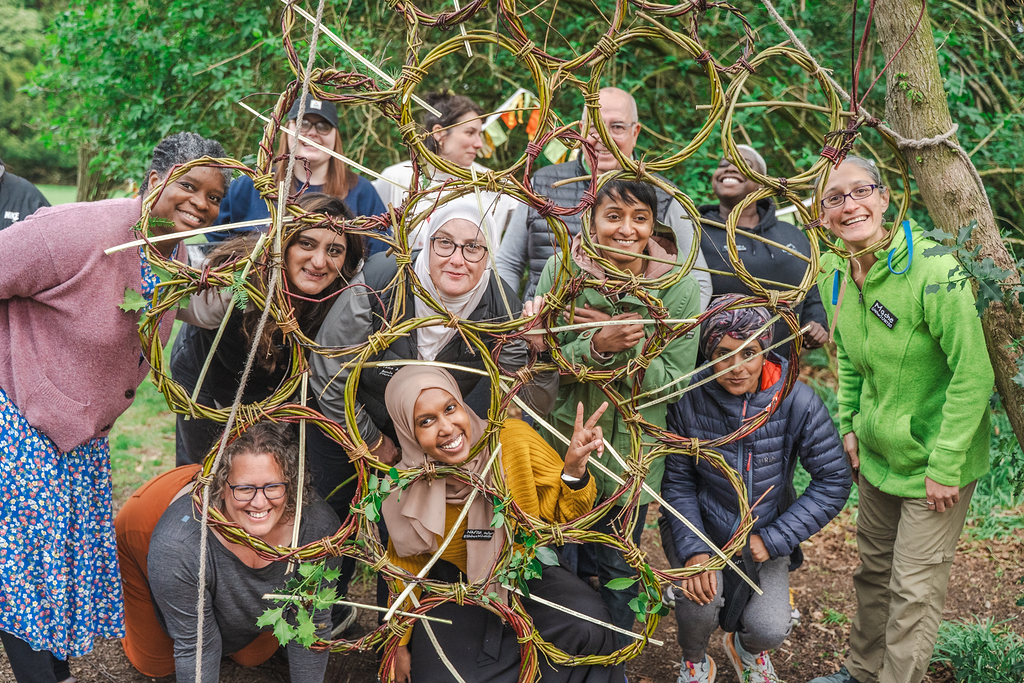
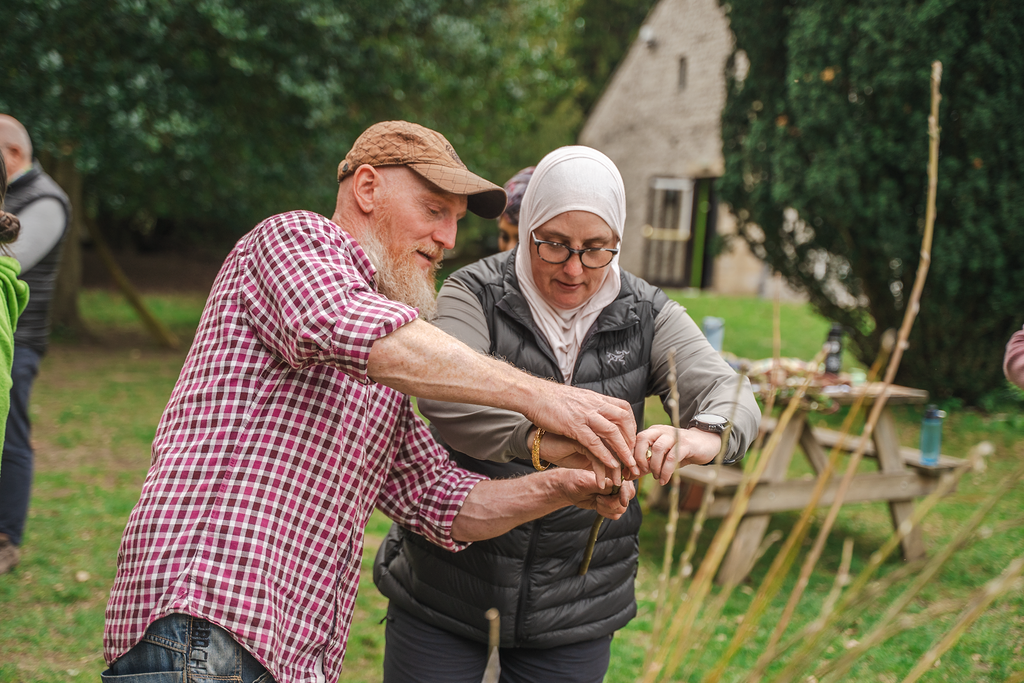
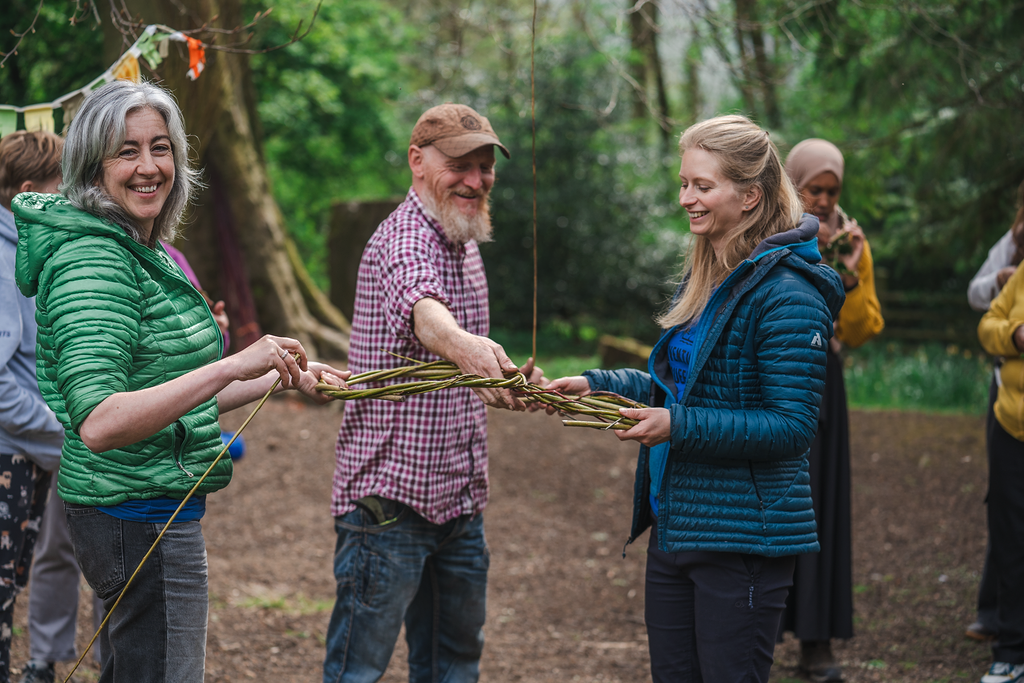
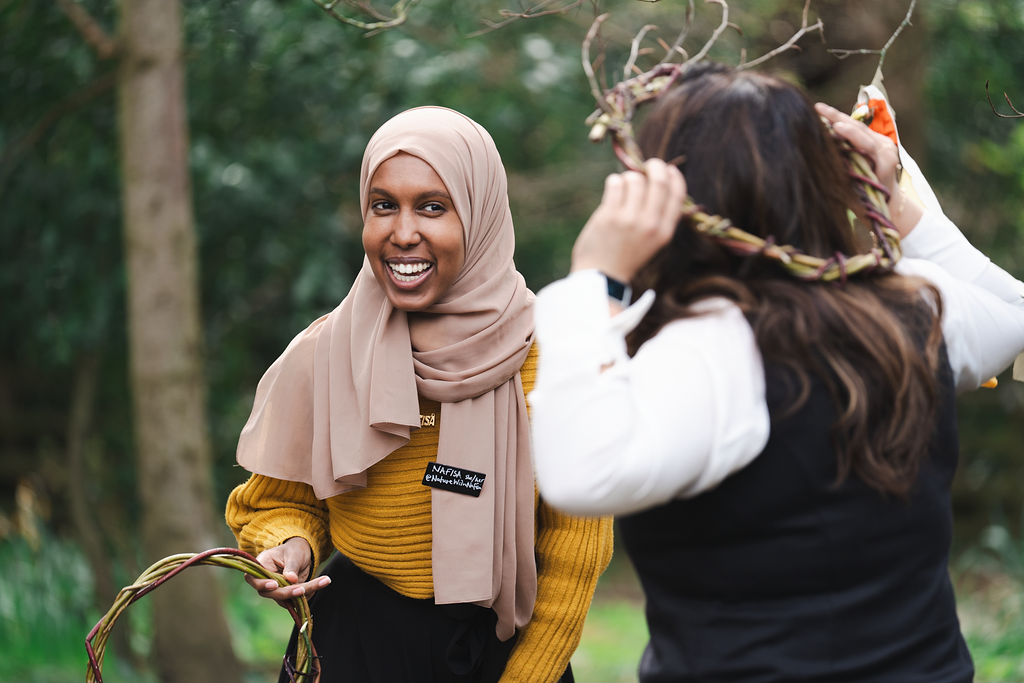
At The Outdoor Connection I co-facilitated a session called “Creative Nature”. The premise was to provide a gentle networking opportunity through a nature related creative practice. Bringing in Anthony Hammond to share the craft of willow weaving, we worked together to create an experience that provided a low pressure alternative to more traditional networking activities.
Facilitating networking is something I’ve done before, always with the “need” in mind to help develop the “How”. I’m aware that many people find Boardroom-style networking difficult - the pressure to find something interesting to say can feel overwhelming and addressing a room may feel exposing; playful approaches to networking can feel gimmicky or need to be overtly led by the facilitator which shifts focus away from participant experience. For this event I built on previous work taking cues from coaching outdoors and the neutrality of nature, walking side-by-side and the joy of creating with willow.
Ensuring the session felt current was vital, and I wanted to play with the idea of a “Social Wall”, a concept that fascinates me. “Social Walls” usually exist online as a montage of moments captured during an event and provide a record of the experience. I wanted to see what might happen if people built something together with their hands, using traditional crafting techniques - leading to a physical and thought-provoking installation. Artist, Anthony Hammond, was key to translating the thought in mind, to a practical activity that people could engage with.
Learning from Waymaking
This creative networking workshop was ambitious and possible only on the back of a year-long research project called Waymaking, which aims to link people to wild public places of the Staffordshire Moorlands for an immersive experience blending creativity and movement within nature - supporting physical and mental health.
Over the last two years, I’ve worked with four artists, each carefully matched to participants and place, with the latter being particularly important. The project encouraged artists to extend their creative practice at the same time as supporting participants to explore their potential. With each of the four artists we explored something different. Working with Eleanor Hooper, a voice and breathwork artist, each session focused on how we breathe, gently building towards harmony and wild singing. Whereas sessions with land artist James Brunt focused on challenging gross and fine motor skills as leaves, twigs and pebbles were arranged into dreamlike temporary pieces. Emma Dawson Varughese’s practice puts relationship to place, and home, at the fore, creating gentle narratives linking people positively to the locations within which they find themselves (Emma and I worked with a women’s refuge using walking and noticing nature to create meaningful decorations for home).
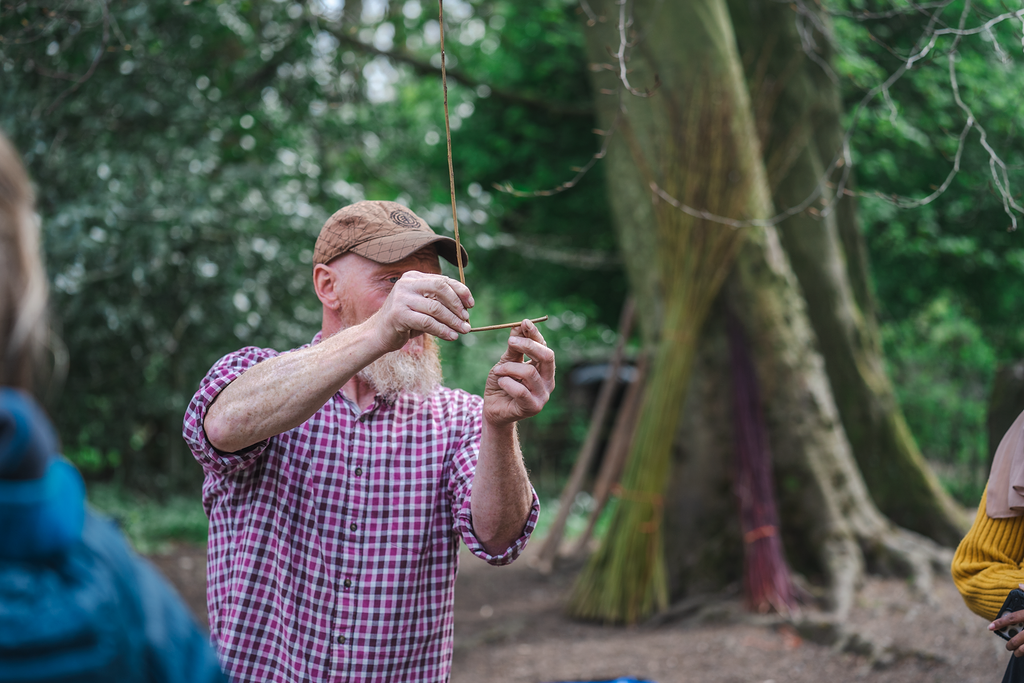
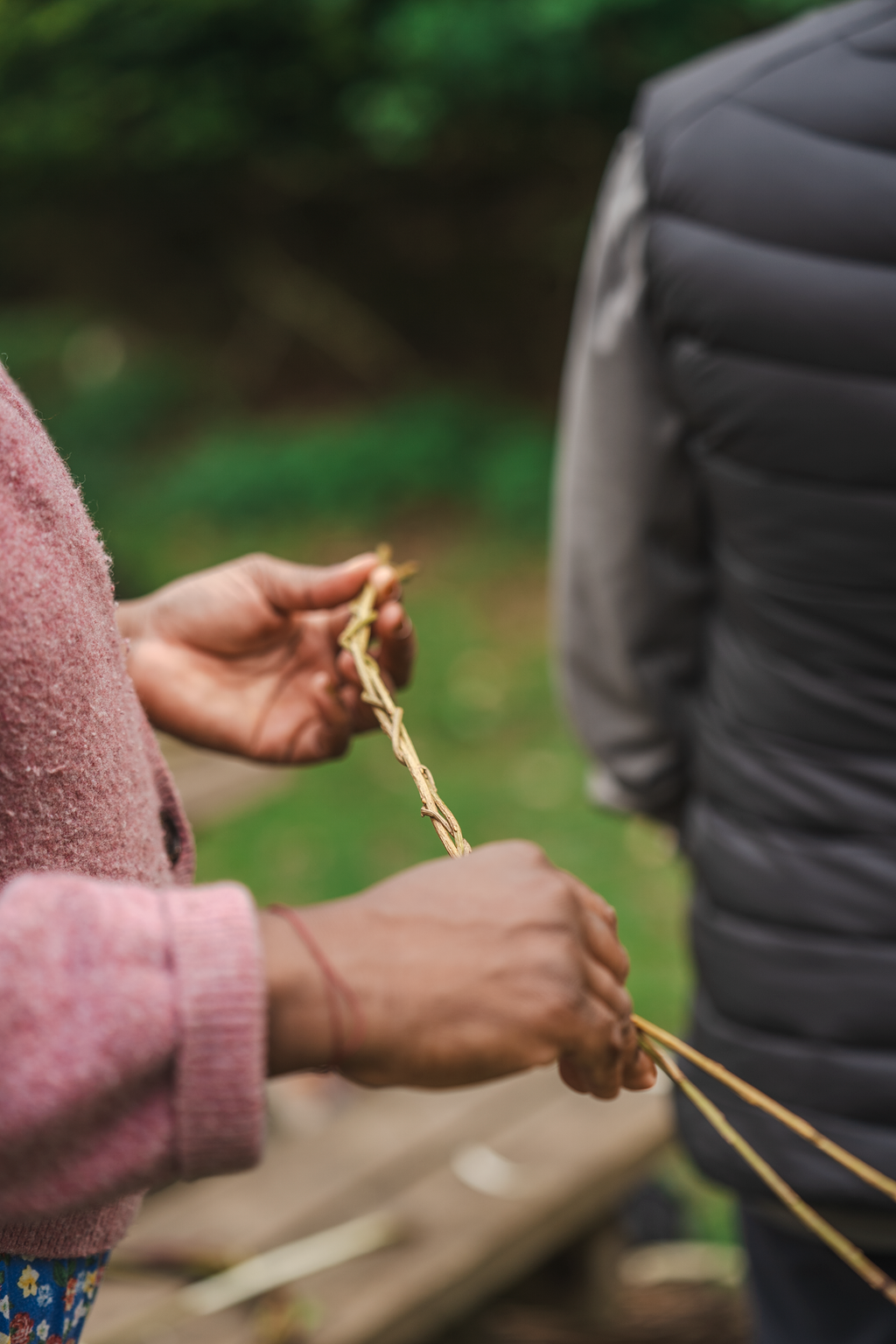
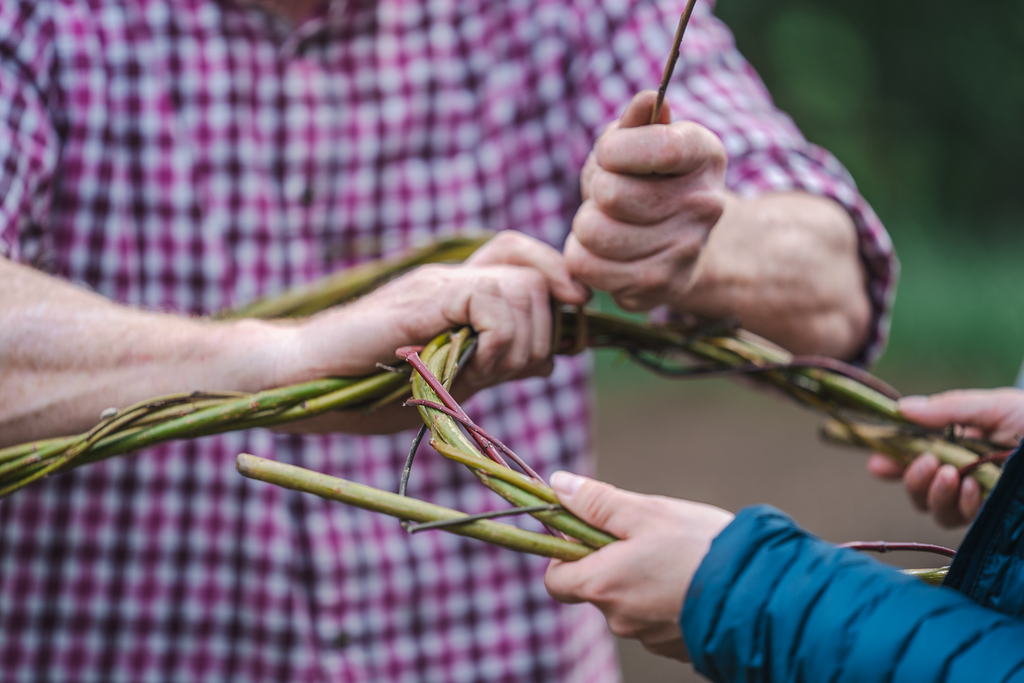
Willow weaving with Anthony was introduced to Waymaking in 2025 on the basis that weaving is beneficial for nervous system regulation. It is rhythmic, repetitive, and tactile, activating our parasympathetic nervous system, helping people to regulate busy minds and encouraging positive feelings of calm and relaxed states. Being a hands-on, creative activity, weaving encourages problem-solving, sensory processing, and pride achieved by making something. When people learn to make something together there is a sense of connection to others - belonging. Given the purpose of networking in the Outdoor Connection, Anthony felt the perfect artist to work with.
Building the Foundations of an Artist Collaboration Session
I always start developing sessions by asking questions. For The Outdoor Connection this meant understanding what the event itself was for, and the purpose of my involvement. There are all sorts of questions to ask yourself or event organisers. A few I’ve asked before are:
What is the problem you’re trying to solve that means this workshop is necessary?
Can you describe the change you’d like to see because of this workshop?
What have you tried before?
Who is likely to join?
Developing a full understanding, and giving yourself the time to think will lead to a well positioned intervention that feels co-created. These initial questions help to create an experience that adds value and that centres on the needs of your participants.
Working With Artists
Waymaking has taught me that artists are under pressure. The necessity of regular income sometimes means they need to take work that pays, leaving little time to explore their own creative practice.
Getting to know artists is vital. Checking that values align on the project (back to the “why”, again) and establishing whether there is anything else complementary in their interests, skills, experience and knowledge that will enhance the participant experience. Ultimately, the questions to answer are: do you both feel comfortable together, how will your practices complement one another, and how will you communicate?
Small things often matter to artists: where am I going, who will I meet, how many people will I be working with, what might they need from me? Allow plenty of space to support the artist to get to know the group, spending the time to do this well helps to build positive relationships through a project and can create openings for new ideas.
It’s also important to check in with your artist before, during and after the event. Just like all of us, they have layers of ‘life stuff’ and being creative and facilitating requires a lot of energy. Checking in helps to make sure the artist feels seen, as well as providing you with the opportunity to consider what support might be needed so everyone has a positive session.
Choosing the Right Artist for the Right Project
For The Outdoor Connection, it was clear that the choice of artist and artistic practice was vital: too abstract and people may feel lost, too experiential and people may feel exposed; too directed and people may feel a lack of agency. Our group was likely to be large, quite possibly tired or ‘headful’ and looking for a restorative experience.
I needed to work with someone who was comfortable facilitating the experience of others, able to share their practice in a variety of ways and who carried a genuine warmth. I also needed to work with someone who allowed me to focus on the group dynamic and who trusted me to guide them to release their artistic talents. Anthony was the perfect fit with his practice of willow weaving, which is easy to try and allows space for conversation around it.
How to Connect With Artists
It is worth taking time to build your network. Internet searches can help you get started, and will tell you about artists in the area, or suggest all sorts of cool websites, but personal contact and relationships matter.
The best advice I have for identifying appropriate artists is:
Be practical. Do your research and get to know what art and culture looks like in your geographical area. You can do this by looking at free resources provided by the Arts Council, and more locally by searching out local creative networks. These are usually free to join and attract artists, funders, community change-makers and place-makers looking to network. Most towns have little hives of activity like craftivism or repair cafes. Taking the time to attend events where you live and to talk to people does lead to new contacts and collaborations. Visiting open studios is also a good place to find out who is local, what their interests are, and how they like to work.
Be proactive. If you have the capacity, volunteer on arts projects. If volunteering is out of reach, attend the free events and introduce yourself to those wearing hi-vis, i.e. the volunteers and organisers! They are usually happy to chat and have helpful introductions that might help you get started.
Be curious. Notice what is happening around you and get involved. Book yourself on that unusual poetry workshop you’ve just seen - it’s just a great way to meet new people and test whether this is a direction you want to develop.
Reach out to your network. Most of us working in the community already have a network of sorts, so use it. Ask for introductions, a personal introduction is more likely to pave the way for what could be a new working relationship.
I want to model the change I want to see and this means working slower, talking to people more, relying on email and social media less, and building those important human:human relationships.
Looking Back - What has led me here
I can’t write about what it felt like to work with All the Elements at The Outdoor Connection without reflecting on a younger me. The stuff that fed my growth then continues to motivate the choices I make today, so let’s go back in time to the mid-1980s.
1985. I was about seven years old, and my parents explained that the hollowed-out tree stump that so fascinated me down at the bottom of the garden was mine. I filled it with soil and tiny plants, violas and snap dragons, I had rescued from cracks in the pavement outside our house. Not long after that I began to look up and notice the trees around me. An imaginary world grew that I was both part of and separate from. I listened to the trees talking when I was skipping on the patio with a rope and I imagined tiny villages full of little houses high up in the branches I couldn’t reach.
Later, as a young teenager with my family, I learned to walk freely along footpaths and mountain trails carrying identification books in pockets naming the flowers, mosses and animals encountered along the way. It is only through the benefit of hindsight that I understand now how much effort went into these adventures then. I grew up roughly 20-minutes-by-bus into Leicester city centre. My parents didn’t drive and to stand on a mountain in the Lake District or visit stepping stones in the Peak District meant stitching together a journey by foot, bus and national rail. There would be inevitable delays, cancellations and strikes impacting the ease or otherwise of getting to the beginning of an adventure. I learned to be patient, to accept and to watch the landscape gradually change from the city outskirts of Leicester – Birmingham – Crewe, to the meandering blurred greens of hedgerow, field and hills. It was, and still is, exciting.
In the early 1990s my friend, Naomi and I joined the Girl Guides. Together we discovered water, kayaking and took on the first of many challenges to be treated equally. Our Scout hut was on the banks of a canal, and the Scouts owned and stored kayaks at the hut. We asked to join the paddle night and were refused because we were girls, and we were told that girls don’t paddle. We protested, built our argument and in the end the area Chief Scout met us and agreed we could paddle.
Formative feelings of having to work hard to gain access to beautiful green spaces, and to have to justify your belonging to them have fed my motivation for others to not have to feel the same way.
I’ve found that the community around All the Elements means that discussions about access happen constantly, and openly. Being part of a live and safe (online / social) community conversation that challenges positively and advocates for inclusion, makes it possible to absorb what is important. Various perspectives filter into our mindsets, helping people like me to check every step of the way that what is being delivered will work for every type of person.
If you’ve enjoyed this article you can read a Community Spotlight we shared about Waymaking here. As well as other articles inspired by The Outdoor Connection here.
Images in this article were all taken by Veronica Melkonian during The Outdoor connection 2025.
