Taking a break as solo founder – an Interview with Queer Out Here
What are our options when things all seem a bit overwhelming and burnout is looming? Do we need to look at closing down the organisations we’ve worked so hard to create, or is there another option.
In this article, we hear from Ailish Breen, founder of Queer Out Here. In Summer 2024 they made the decision to take a break from delivery and pause the work of Queer Out Here for several months, and we delve into their key learnings from this process.
Can you tell me a little about Queer Out Here, and what you do?
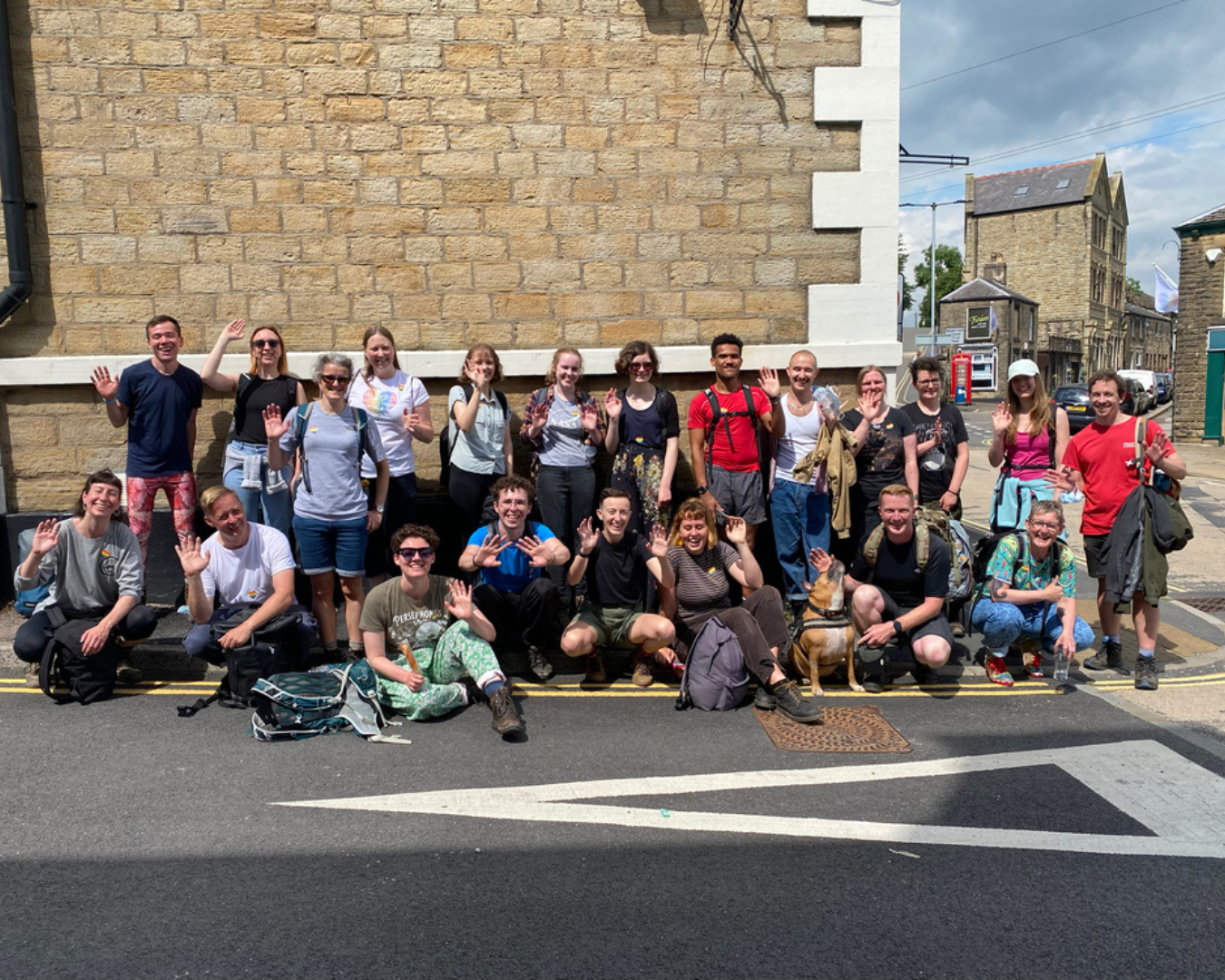
Queer Out Here is a walking group for LGBTQIA+ people. We organize monthly-ish hikes that are free to attend and largely in the northwest of England. The whole ethos is that being together in the outdoors is good for you in many ways; for physical and mental health, and it's great for finding a sense of belonging - both with yourself but also within your community. Lots of the people who come along on our walks are fairly new to the walking, and then at the other end of the spectrum, we have very outdoorsy people who have never done that in a queer community.


You founded Queer Out Here on your own. What motivated you to set it up?
Partly it was selfishly driven; I like going walking, and I love my queer friends, but those two things didn't often come together. So I wanted to find some nice queer people to go outside with! I was also very inspired by other groups I saw emerging at the time, mostly People of Colour led organisations like Black Girls Hike and Peaks of Colour, who were talking about the importance of safe spaces in the outdoors. I didn’t see a queer equivalent around at the time, and having grown up going hiking, I was interested in creating that. I also knew that queer people, like everyone, need spaces to look after their wellbeing, and I felt strongly that nature could play a really important role in that.
How did Queer Out Here develop over the first few years?
For the first three or four years of running it, I organised every walk that happened, so that involved recceing a route, doing a risk assessment, posting it online, promoting it on social media, leading on the day, and making sure everyone had a good time and felt included. We ran almost one a month for that time, so it was a lot of work. It was great to see how many people wanted to go walking, but gradually it just started feeling less like fun and a bit more relentless.
“It was great to see how many people wanted to go walking, but gradually it just started feeling less like fun and a bit more relentless.”
What do you think was behind the shift to it feeling more overwhelming?
From the start, I set it up in a way where everything rests on me — it started out as just arranging a few walks, and by the time it had grown into something bigger, doing it all myself had just become the norm. It felt like if I stop, Queer Out Here stops, and that weight can be hard to carry when you can see how much people value it. A couple of times I tried to bring in some volunteers to help out, but it didn’t quite work out in terms of how much preparation people were prepared to do. So I ended up continuing to do everything myself. Around that time I had a really busy work year - basically I just took on a little bit too much, and something had to give.
What did you do to address the fact it was feeling like too much?
I realised I needed a little break from Queer Out Here. At the time it felt like this big thing, putting it on Instagram that there would be no more events over the summer. But in reality, it was only four months of not organising a walk! I had a couple of people messaging to ask when the next walk was, and so I did feel a bit of pressure to come back to it.
“I realised I needed a little break from Queer Out Here. At the time it felt like this big thing.. But in reality, it was only four months of not organising a walk.”
What were your biggest concerns about taking a break?
I was worried about what people would think, whether they’d judge me in some way. Which is really weird because it's entirely voluntary - the majority of our events are completely free to attend, and nobody's depending on me in any formal sense! So I don’t know why I felt this pressure to continue providing a service or people are going to be mad at me.
I was also worried that I wouldn’t restart it, and what that would mean about my ability to keep going with things. It’s become wrapped up in my identity, and people know that I do it, so it’s a bit like ‘who am I if I don’t do this thing?’
What was the response from the community to the break?
They were really supportive slash indifferent! A few people got in touch to say well done, and acknowledge it must be hard doing it all the time and saying they were looking forward to when it comes back. But unsurprisingly, literally no one was mad.
Was there anything in particular you did during the break?
I looked after myself more and had a bit more headspace. I also planned out the year ahead and what the calendar would look like, which I hadn’t really done before. I looked at how I could not run everything and who I needed to contact. They turned out to be people I already knew, and it was just a case of sending an email – just a two minute job - but it gave me the headspace to do something I never seemed to get round to.
Has anything changed as a result?
I’ve managed to get a couple of people regularly involved in organising walks who have been very responsible and reliable and done an amazing job. I’m so grateful for this - it doesn't always come together easily, sometimes people still pull out at the last minute, but it's a work in progress! Organising two or three walks a year rather than nine or ten makes a big difference. Overall it feels much more manageable, and I'm enjoying the stuff I get to do much more, like organising the trips we do.
“Overall it feels much more manageable, and I'm enjoying the stuff I get to do much more, like organising the trips we do.”
There's also been a slight loosening in realising that people are more understanding than I'd given them credit for. So if I need to change something again, that feels slightly less scary.


Is there anything that hasn’t changed as a result of the break?
I still don't really know what Queer Out Here looks like in the future. I like it existing, and I like being involved, but I think something needs to change. There's a real tension at the heart of it - it's meant to be a shared community space, but I think community spaces still need someone who's ultimately responsible for making sure things are done safely and inclusively, and I haven't quite figured out how to share that in a way that feels right yet.
Maybe it evolves into something more formal — I've thought about whether there could be more of an ethical business model, or paid elements that make it more sustainable. Or maybe at some point someone else takes the reins and I show up as a participant and put my energy into other things, like the queer coaching work I do. I honestly don't know yet, and I'm trying to be okay with that!
Is there anything you would do differently if you did it again?
I’d take a longer break and not rush back so I’d have time to think about what I actually needed. I definitely felt the pressure to start again, so I probably didn’t take enough time to think about what ‘good’ would look like coming back.
How can people find out more about your work?
You can visit our website, or follow us on Facebook and Instagram.
How can people help?
If you're a web designer or graphic designer who'd be up for donating some time to a website redesign for a queer outdoors community group I'd love to hear from you!
If you're an experienced walker or outdoor leader who'd be interested in organising and hosting the occasional walk for a friendly queer group, that's exactly the kind of help that makes this sustainable.