Behind the Scenes of Youth Rewilding - An Interview with Youngwilders
4 in 5 UK young people are eager to take environmental action, while only 1 in 5 believe they are being listened to on environmental issues. Youth-led nature recovery group, Youngwilders are working for change in this area, partnering with landowners and running nature recovery projects across the UK.
Their work has grown significantly since 2020 when they began the process of finding their first rewilding project. In this article we chat to Co-Director Jack Durant, to learn more about their growth, the process they've gone through and the advice they’d give to other young leaders looking to develop their own projects.
Youngwilders at a glance…
Founded in… 2020 (informally) and then formal founding in 2022
Specialise in… Rewilding and youth-led ecological restoration
Biggest achievement… Building a growing network of youth-led nature recovery projects across England and Wales, where young people (aged 18-30) have real decision-making power over land and ecological restoration
Community size… Core team of 10, 14 Wild Stewards (rising to 22 next year), and a wider community of hundreds of engaged young people across events, WhatsApp groups and newsletters
Incorporation… Private company limited by guarantee without share capital
Community Interest Company (CIC). Registered in 2022
Events and programmes… Seasonal volunteer days at each site (four per year), a year-long Wild Stewards programme, plus occasional weekend events and workshops.
Find them on… Youngwilders.org, Instagram and TikTok
What was the catalyst for Youngwilders?
Youngwilders originally started in 2020 when our group of friends - myself, Molly Easton, Oscar Hartman-Davies, Anya Doherty, later joined by Noah Bennet - got together to talk about what was going to be a personal nature recovery project. We didn’t intend for it to be an organisation at all. We didn’t have any money or any land so we started pestering lots of landowners and sending out lots of cold emails. We contacted different wildlife trusts, universities, parish councils and any kind of body we thought might have contact with a landowner. As we were all from London, for convenience’s sake we initially went for areas close to us. Eventually a landowner said they were willing to take a chance on us.
And then just really slowly, through chatting to people in the rewilding world and hearing what young people worried about in the nature sector, we got a bit clearer of a picture of what the problems in the sector were, and where the areas were where we might be well placed. It then gradually shifted from a personal project into an intentional organisation.
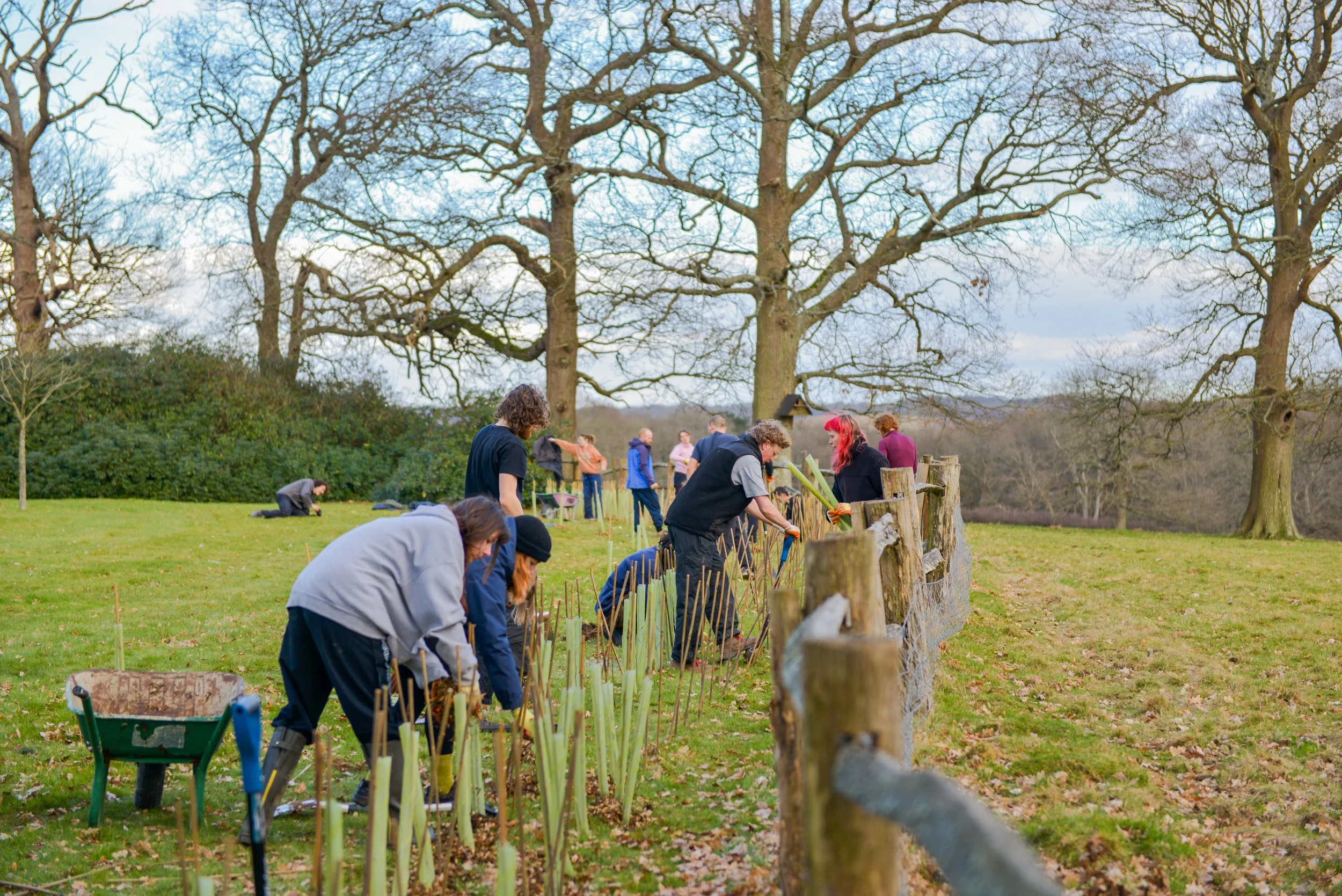
Now we have a dual aim. The first is to accelerate the UK’s nature recovery and the second is to involve young people in the process and movement. We do that primarily through our youth-led nature recovery projects. These are ecological restoration projects of various kinds, shapes, sizes and habitat types where we try to maximize youth involvement in every aspect of the process. That’s from the monitoring to the planning, implementation and use and enjoyment of the sites as well.
Where does Youngwilders operate and what do you do?
Maple Farm was our first ever project, and that was on the border of Surrey and Sussex. Now we collaborate on 13 sites across England and Wales. At Maple Farm we now have a wild flower meadow, hedgerows, eco beehives to help wild honeybees and an outdoor classroom. In Monmouthshire we are creating pond systems and planting native hedgerows to create eco-corridors in a number of places across the country. Basically we’re trying to be as diffuse across England and Wales as we can. The way that nature recovery works is you try to get balls rolling on a given habitat type, which might involve planting some saplings, plug planting, sowing some seeds. The dream is always that once these things take and establish to a certain degree, they're over the danger zone, and then they can proliferate.
“I am a big believer in learning through doing and understanding what the scene you are in needs from you by being in it and then interacting with it as much as possible.”
I am a big believer in learning through doing and understanding what the scene you are in needs from you by being in it and then interacting with it as much as possible. When what we’ve planted is in a vulnerable, nascent state, a dry summer and drought will cause absolute carnage. We had our first pretty concerning moment along those lines last year when we planted a few hundred trees in South Wales. It’s usually very wet, but last year it was incredibly dry. The survival rate at that site for the trees has been very bad.
One of the blessings for us was that moment happened after we'd already had a fair amount of success in other areas. We'd built up a robust feeling that we knew what we were doing and that if the weather was predictable enough we could do certain things. But we were ready to have that shock when we had it. If we'd had that in our first ever planting season that would have been a more difficult thing to deal with.
Every day is a school day.
How can other young people get involved?
Young people can get involved in different ways and at different levels. They can attend seasonal events we host at each site. Each site has four volunteer days a year which corresponds to ecological work that needs to happen on the site. We have quite a few repeat attendees there. We cover people’s travel and we try to make it as accessible as possible. We try to build a micro-culture around each of these projects, and host games and workshops.
The idea is that with that agency, they learn a whole bunch of things, and they get to see themselves reflected in the landscape and build a more substantive relationship with it than would be possible otherwise.
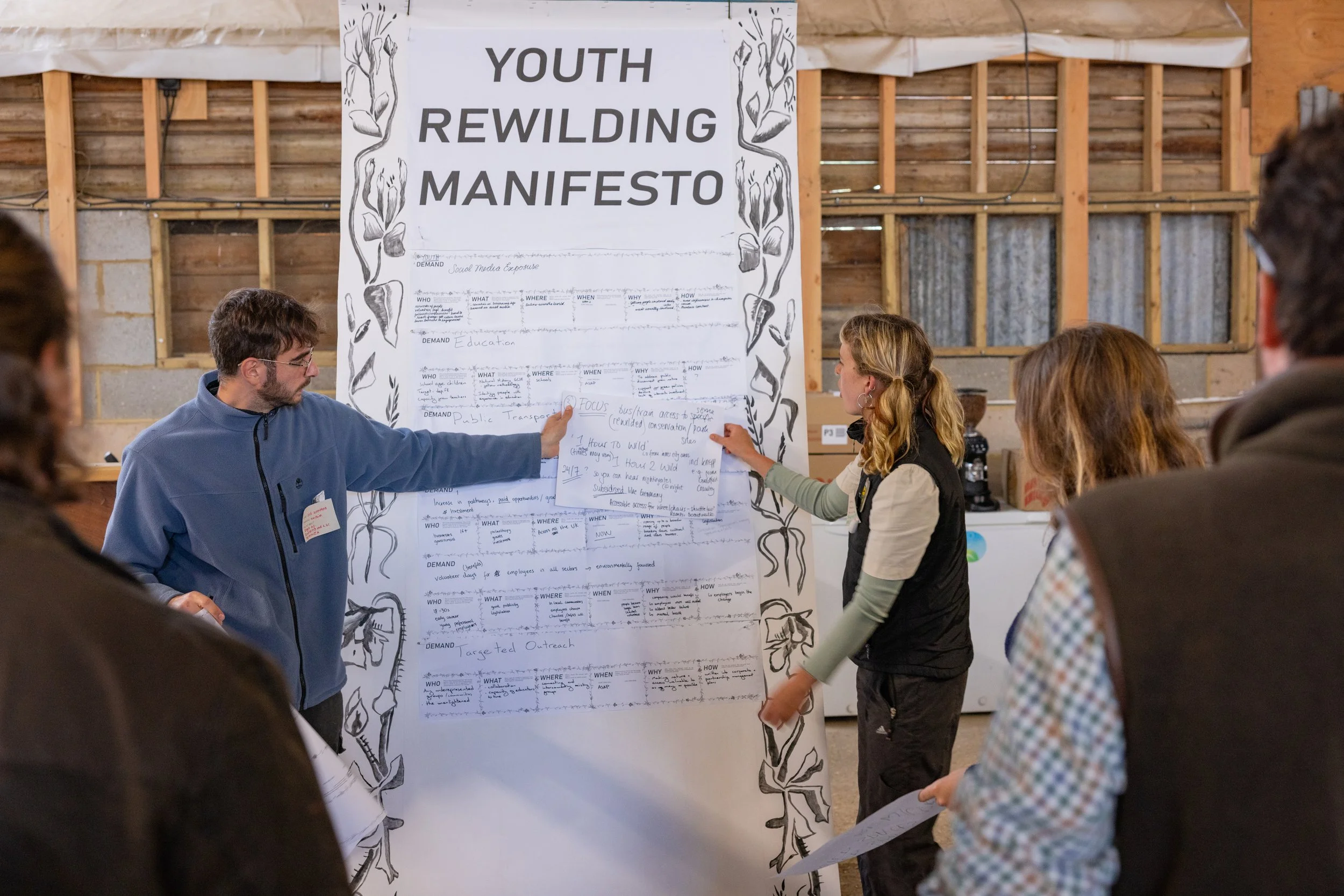
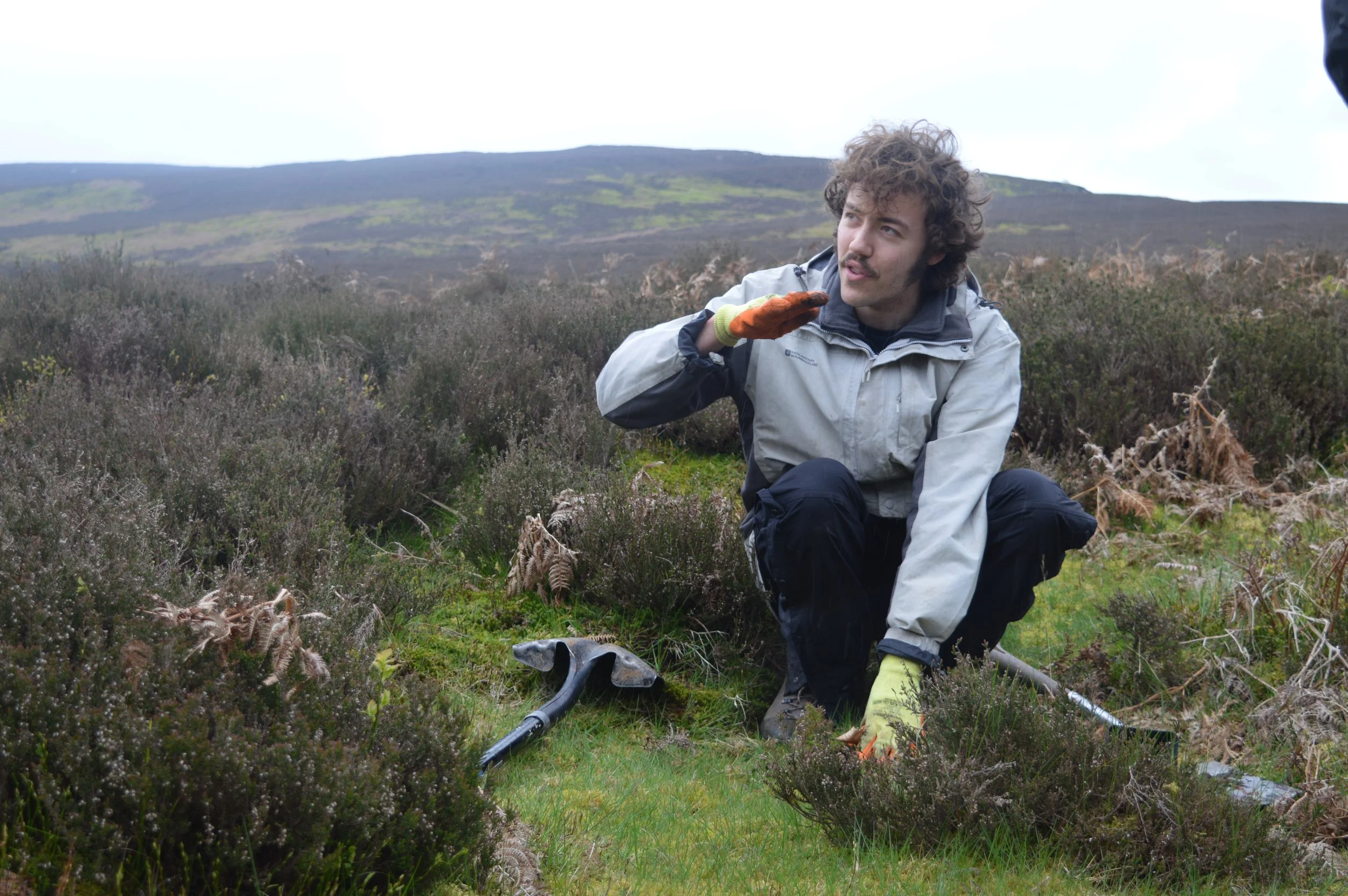
We then have an in-depth style of work with our Wild Stewards programme. This is where we assign a young person to a site that is local to them for a year. They are given decision-making control alongside another Wild Steward. The idea is that with that agency, they learn a whole bunch of things, and they get to see themselves reflected in the landscape and build a more substantive relationship with it than would be possible otherwise. It harks back to an older form of stewardship, which other cultures are much more in touch with. We also have a complementary online course that supports them through their work on the site. The whole idea is it’s an educational programme, and it’s a learning-through-doing programme. It's high agency, as they are basically given decision-making control alongside the other wild steward they are working with, but we also pay people for their time. It’s flexible, as the idea is people can fit it in alongside their studies etc. And then we go even further in-depth and we have residential retreats which last a few days, workshops and more.
How does Youngwilders approach community building?
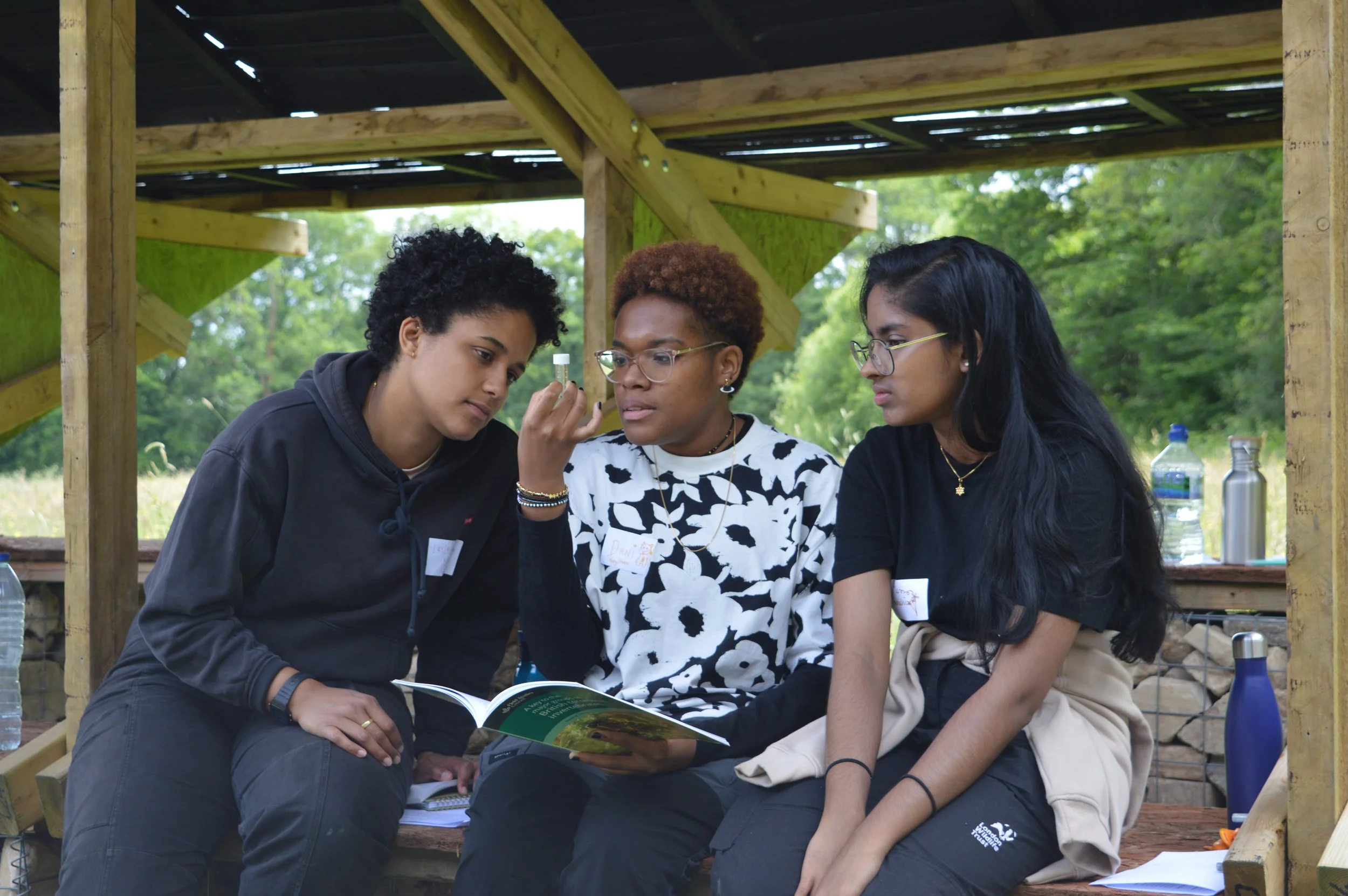
We want to be an organisation that sits across young people from all different kinds of backgrounds. We're also interacting with land partners who sometimes are quite fancy institutions or individual landowners who are quite wealthy. It’s an interesting space to bring a working-class person of colour who's lived most of their life in a city into an environment where there's old money. These are very different demographics that we're at the confluence of and we're trying to manage that.
We try to keep a sense of community. We try to talk about all of this stuff and avoid elephants in the room. We’ve recently had panels on land ownership and access to land, and private owners fencing space off. We’ve also had panels on whiteness and the rewilding space. We want to talk about the frictions that are present in our sector and in our work.
We want to make Youngwilders a really accepting environment so people can really let their nerdiness totally off the leash. If they're obsessed with a really specific snail, then here they can meet others and let it all spill out.
We lean really heavily on this idea of people needing to have a good time. The way we curate an attractive atmosphere is by being unabashedly hopeful. It’s partly a genuine reflection of our personalities, and partly a reflection of the genuine successes that are happening in the UK.
Where does your funding come from?
About 70% of our funding comes from grants and 25% comes from payments from land partners - so that could be a private landowner, a council, a community owning land, etc. They'll give us money for the work that we're doing on the land. The remaining amount is public donations.
We were advised not to get a grant writer, and I think for us that was really good advice. We were told your bid doesn't have to be polished, but you have to include all the emotion you have in you. The funders will hopefully grasp where you're coming from. It’s obviously cool if you can afford to get grant writers – and it does work well for a lot of people – but for us it was a good decision to do it ourselves. We were also really lucky that our co-founder Noahis a very natural and willing ‘numbers guy’.
What are some of the ways your work increases access for young people?
We have three A's we consider as guiding principles for our youth nature recovery projects. They are Access, Action and Agency. We’ve already touched upon how we ensure there is action and agency for those involved, but access is also an important part of our work.
Financial accessibility is a seismic issue in the environmental sector, and in the conservation sector more specifically, because the amount of volunteering that's required is totally unhinged and absolutely impossible for most young people.
Travel is a huge thing as getting to these sites is really expensive, difficult and awkward. There are often quite big personal emotional barriers to travelling two hours to a random place you've never been to before, especially if you're a young person of colour, and you're going deep into an English white area of countryside. We find quite frequently that the first time some young people will have been in a tent is at a Youngwilder's event.
Our priority groups for improving youth access are young people of colour, young working class and financially disadvantaged people, and then people with additional physical or mental access requirements. On that third stream of engagement, there's a limitation in how much we can do as an organisation as we’re not qualified to work with people who have severe disabilities. To combat this, we have different things in place like the relationships we've been building with other organisations who have more experience in these spaces. This allows us to make our events much more accessible for people.
But we factor things in, like if people have chronic energy issues we share with them the amount of energy required for each thing that's happening at all of our events. We always have a lower energy alternative and a chill area for people to go to if they need.
What’s next on the horizon for Youngwilders?
If we had had to make a concrete plan in 2020 we wouldn't have made a good one, because we just didn't know what was needed. The fact we had the first few years trying to learn as much as possible and not really having that much of a vision – that’s all now fed into what is a very steady, compelling informed vision which we know we’re well placed to deliver.
Now our North Star goal is to have a youth-led nature recovery project within an hour of every young person in England and Wales. We aim to be a dialed in youth agency playing a fundamental part in solving the nature and societal disconnect puzzles. We want to live those values and give young people agency over the organisation. Youngwilders will always serve the scene the best if it’s run by young people.
How can people find out more about your work?
You can visit our website Youngwilders.org find us on Instagram @youngwilders_ or on TikTok @youngwilders
How can people help?
We are looking for support to create our third and final on-the-ground team in the South East of England. Their work would be solely youth-led nature recovery project execution, and so give more capacity to the co-directors who currently do this work alongside running the organisation. We already have the local connections and projects ready to go, but we need two key resources to unlock this next phase. First, we are looking for funding to hire this dedicated field team, an investment that will have a massive compound effect by allowing our Co-Directorship to focus entirely on strategy, and scaling our impact. Second, we’d love to connect with experienced leaders for management advice or strategic mentorship to help us steward Youngwilders as our organizational structure evolves.