Making impact measurement meaningful - Insights from Nadia Weigh
Have you found yourself focusing on delivering as many activities as possible, but forgotten to stop and look at the impact of your work? Are you taking the time to stop and check that your work is having the impact you’re intending it to? Do you get confused between phrases like outcomes and outputs? Do you struggle to demonstrate your impact in your grant reporting and with future funders?
Join us as we delve into the world of impact monitoring, demystify some of the terminology, consider what you should be measuring, and explore some of the common methods you can use.
This article is written by Steph, co-founder of the plus size community Every Body Outdoors. Steph joined us at The Outdoor Connection as a Community Writer helping us to share learnings, insights and stories from the event.
This article has been inspired by the session “Not Just Numbers: Making Impact Measurement Meaningful” facilitated by Nadia Weigh at The Outdoor Connection 2026. In the session Nadia shared her experiences of measuring impact for global and national programmes, as well as how she has applied this in her work with Adventure Queens.
Through a series of articles, we’re sharing key takeaways from some of The Outdoor Connection event sessions, interviews with leaders, additional discussions and much more. This is the second article in the series. The Outdoor Connection is an in-person event bringing together community leaders who are working to support access to nature and the outdoors, run in partnership between YHA Outdoor Citizens and All the Elements.
The 2026 event was supported by YHA (England & Wales), Natural England and Sport England.
Why bother?
When you’re really busy, measuring impact can seem far from a priority, so why should you embed this into your work?
Firstly, it’s a learning opportunity. It gives you the opportunity to understand what impact you are having – both positive and negative - and what you might want to change.
Secondly, it allows you to communicate the effect your work is having. This can be to participants, staff, volunteers, supporters or existing funders, as well as building an evidence base to help secure future funding. Many community leaders also find that seeing the impact they are having helps motivate them to continue driving the work forwards.
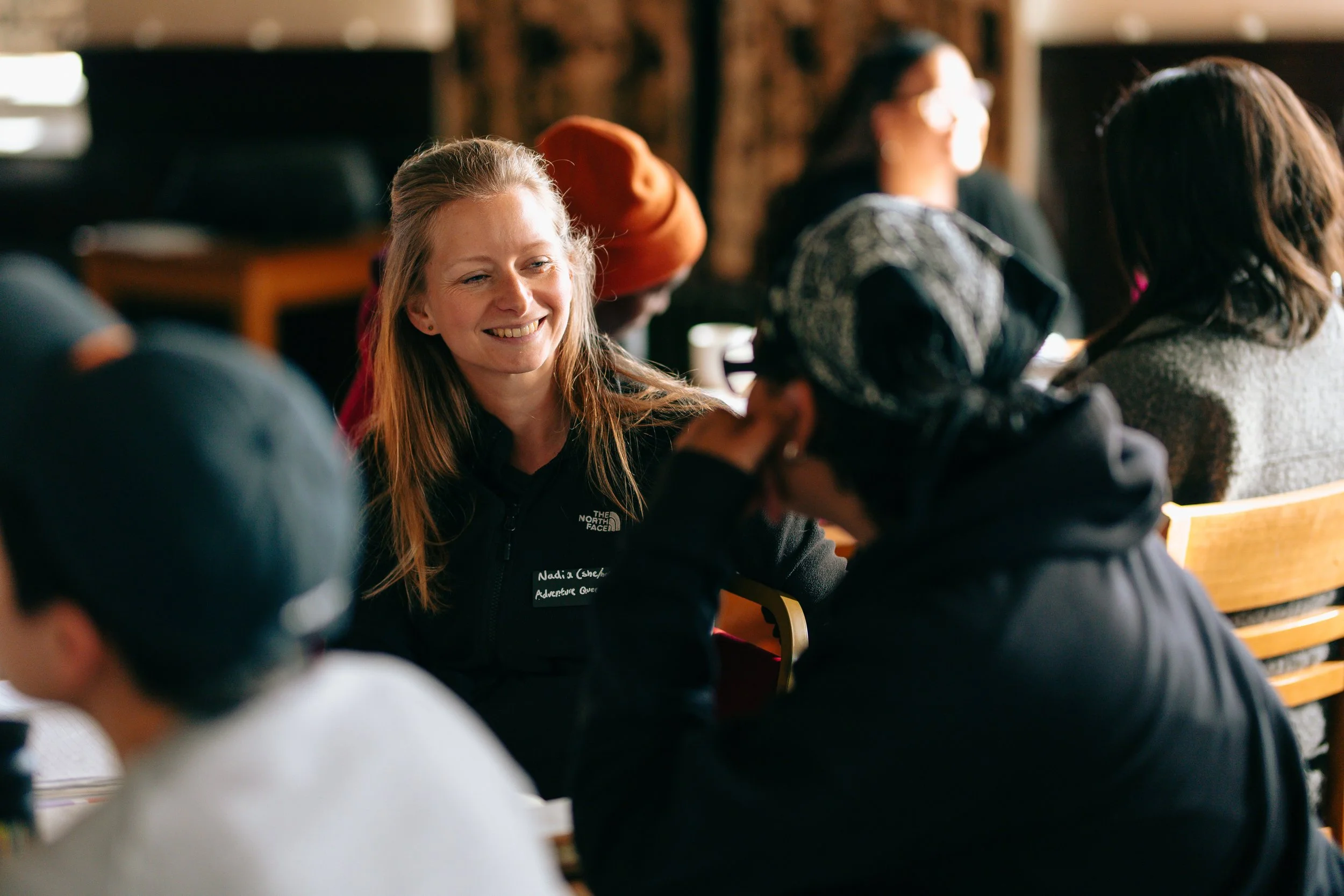
Image Credit Celie Nigoumi
Choosing what to measure
What you measure will vary depending on your work and why you are looking at your impact. It may be appropriate to look at the organisation as a whole, or to focus on a specific project or stream of work - or both!
There is some common terminology you might hear, and it’s helpful to understand what each means:
Inputs – this is the things you put in, such as time, money and kit.
Capturing this helps you understand what things cost
Activities – this is what you spend your time on, such as planning sessions or advertising events.
Capturing this helps you understand what you are spending time on.
Outputs – this is what you actually deliver, such as the number of hikes completed or workshops delivered.
Capturing this helps you understand what you’re actually delivering.
Outcomes – this is what changes for people, such as increased skills or greater confidence.
Capturing this helps you understand if and how you’re making a difference.
Impact – this is the bigger, long-term change, such as healthier individuals or stronger communities.
Capturing this helps you connect your work to the bigger picture.
Impact measurement tools and techniques
When considering which tools and techniques to use to capture data representing your impact, a good place to start is to consider what the information will be used for and who it’s targeting. Some funders will just want a report, other stakeholders might not read a report but would watch a video. The data and information inputs needed can be quite different!
Here are some ideas on how to capture data:
Surveys
These can be helpful to capture change over time, and are quick and easy to set up, and can be sent out to large groups of people which helps to gather a lot of feedback in one go. However, they can be quite surface level and struggle to capture the deeper impact that your work might have. For example, it’s easy to use a survey to measure confidence levels on a scale of 1-10 before or after an activity, but difficult to capture how this affects participants’ subsequent experiences.
Top tips – keep them short and ensure you don’t have any leading questions.
Case studies
These are good for bringing impact to life and sharing personal stories and can be really engaging. However, they can be time consuming to create and may not show the breadth of impact because they focus on specific areas or people.
Top tips – combine with other (numerical) methods that capture the breadth of your work and always check if participants want to be anonymous.
Tracking participant data
This can be helpful to measure outputs (e.g. number of participants attending) and ensure you’re reaching your target audience. It can show the reach of your work but it won’t directly show the impact of your work.
Top tips – use this alongside methods that capture the change and storytelling.
Informal conversations
This provides deeper insight into personal experiences and can pick up on unprompted insight. However, they can be biased and easy to misremember if not recorded.
Top tips – write down quotes straight after or record (with consent).
For example, for a programme that involved a group of participants engaging in a series of hikes, you might:
Send out a survey to measure personal confidence levels in outdoor spaces or other factors before the programme starts, and then a second follow up survey after it ends to give you comparative data on how your hikes have impacted the participants.
Choose a few participants to profile for a case study to share more info about why they participated and the impact it had on them. This can give a personal insight into the real-world impact of your work.
Record attendee numbers for each hike. This provides quantitative (numerical) data on your reach.
Capture quotes from conversations with attendees that happen during the hikes. Similar to case studies, this can provide personal insights through testimonials and quotes.
Image Credit Celie Nigoumi
Communicating your impact
If you’re taking the time to capture your impact, don’t forget the important final step, which is to communicate it! Similar to the last two steps, the methods you choose will be influenced by who you are communicating with. This will affect what information you share and how.
Some audiences you might want to consider are:
Participants. It can be really helpful for participants to see their own progress. This might be through sharing survey results or via follow up messages.
Volunteers/staff. Seeing the impact of their work can help with retention, and support them in reflecting and improving what they do. You might do this through volunteer briefings or email/WhatsApp updates.
Existing funders. This will help them see how their funding is being used and the difference it is making, which can support ongoing and future funding relationships. Common methods might include case studies and grant reports, but you must ensure it is in line with the information they have asked for.
Partners. When working with others it can be powerful to demonstrate the value of a partnership to encourage ongoing collaboration. This might be through impact summaries, co-branded content or email updates. Partners might also have their own reporting requirements, or can support with data or information collection and sharing. It is worth having conversations early on to identify how you can support each other.
Potential funders/supporters. Showing the credibility of your current work can help attract funding for your future work. You might put together a pitch deck, website impact page or include key info in grant applications.
Trustees/board. Sharing can provide key oversight and inform future strategic direction. Common methods might be through board updates or summary reports.
Wider community. Raising awareness of your work can help attract new participants and build credibility within the wider sector. Consider social media posts sharing statistics and stories, blog posts and website updates. If you have any particularly powerful or moving stories, you might want to consider approaching local or national press (with the permission of those featured of course).
Key takeaways
When you’re planning a programme of work, think about what outcomes you’re hoping to achieve and how you can best measure them, and plan this in from the start.
There isn’t a right answer in what approach to use to collect data and information on your work, but generally you want to use a mix of qualitative (anecdotal and storytelling) and quantitative (numeric) methods.
It’s easy to just focus on the outputs, but it can be helpful to make sure you’re capturing on what changes as a result of the work.
Considering the audiences you want to reach and inform about your impact will influence the methods of data collection you use and what you measure.
This article was inspired by a session delivered by Nadia Weigh at The Outdoor Connection 2026. If you’ve enjoyed this article you can read other articles in this series including Advice for new organisations - from attendees of The Outdoor Connection.
About Nadia
Nadia has spent over 15 years working in the social impact space through her day job in international development and volunteer work alongside that. Much of her work has been on donor-funded programmes, which means thinking carefully about measuring our impact and demonstrating it in a meaningful way to our funders and other stakeholders.
Alongside this, she runs Adventure Queens, a not-for-profit that aims to get more women active outdoors, where she brings those same principles into a more community-led setting.
To find out more about Adventure Queens visit the website adventurequeens.co.uk, follow them on Instagram @adventurequeensuk and LinkedIn @AdventureQueens
To find out more about Nadia follow them on Instagram @nadia.by.the.wey and LinkedIn @NadiaWeigh